Introduction
If you want to build a successful career in animation, your animation portfolio matters more than your marks or certificates. Studios, gaming companies, VFX firms, advertising agencies, and production houses all want to see your creativity, technical skills, storytelling ability, and problem-solving approach before offering internships or jobs. A well-designed animation portfolio showcases your talent, dedication, and growth while helping recruiters understand your strengths.
Many beginners spend months learning software but never organize their best work professionally. As a result, they miss valuable opportunities despite having good skills. Whether you’re interested in 2D animation, 3D animation, character design, VFX, motion graphics, gaming, or digital illustration, your portfolio becomes your professional identity.
An impressive animation portfolio doesn’t require hundreds of projects. Instead, it should include carefully selected work that highlights quality over quantity. Every project should demonstrate your creativity, technical understanding, design thinking, and attention to detail.
This Student Portfolio Development Guide explains how to build a professional animation portfolio, what projects to include, common mistakes to avoid, career opportunities, salary expectations, course details, and expert tips to help you stand out in the competitive animation industry.
What is an Animation Portfolio?
An animation portfolio is a professional collection of your best creative work that showcases your animation skills, artistic abilities, software knowledge, and storytelling techniques. A strong animation portfolio includes original projects, character designs, 3D modeling, animation reels, lighting, texturing, visual effects, and examples of creative problem-solving. Students should regularly update their portfolio with high-quality projects and present it professionally to improve their chances of internships, placements, freelance opportunities, and successful careers in the animation industry.
Key Takeaways
- Build an animation portfolio from your best projects, not every assignment.
- Showcase quality instead of quantity.
- Include a professional showreel.
- Display your complete creative process.
- Add personal projects alongside academic work.
- Keep updating your portfolio every few months.
- Learn industry-standard software.
- Create projects for different animation styles.
- Present your work professionally on online platforms.
- A strong animation portfolio often has a greater impact than certificates alone during interviews.
What is an Animation Portfolio?
An animation portfolio is a carefully organized collection of creative projects that represents your technical skills, artistic abilities, storytelling techniques, and software expertise. It acts as your visual resume when applying for internships, freelance work, higher studies, or full-time animation jobs.
Depending on your specialization, your portfolio may include:
- Character designs
- Storyboards
- Environment art
- 2D animation
- 3D animation
- Modeling
- Rigging
- Texturing
- Lighting
- Rendering
- Motion graphics
- Visual effects
- UI assets
- Concept art
- Digital illustrations
- Sculpting projects
- Walk cycles
- Acting shots
- Product animations
Recruiters generally spend only a few minutes reviewing a portfolio. Therefore, your strongest work should appear first.
Essential Sections Every Animation Portfolio Should Include
1. Professional Introduction
Include:
- Your name
- Specialization
- Skills
- Contact information
- LinkedIn profile
- Portfolio website
- Email ID
Keep it clean and professional.
2. Demo Reel
A demo reel is the most important component of an animation portfolio.
Keep it:
- 60–90 seconds long
- High quality
- Professionally edited
- Focused on your best work
- Easy to watch
Avoid adding weak or unfinished projects.
3. Character Design
Recruiters love seeing original characters.
Include:
- Expressions
- Turnarounds
- Costume variations
- Color studies
- Pose sheets
- Personality exploration
4. Storyboards
Storyboards demonstrate visual storytelling.
Include:
- Camera angles
- Scene transitions
- Acting
- Timing
- Composition
5. 3D Modeling
If you specialize in 3D animation, showcase:
- Hard surface models
- Organic models
- Characters
- Props
- Vehicles
- Architecture
Show wireframes as well.
6. Texturing and Lighting
Good lighting makes your models look professional.
Include:
- Texture maps
- Material breakdowns
- Lighting variations
- Final renders
7. Animation Exercises
Recruiters appreciate strong fundamentals.
Include:
- Bouncing ball
- Pendulum
- Walk cycle
- Run cycle
- Jump
- Lip sync
- Acting shots
8. Personal Projects
Personal work demonstrates passion.
It often impresses recruiters more than classroom assignments because it reflects creativity beyond the syllabus.
Common Mistakes Students Make
Many students unknowingly weaken their animation portfolio by making avoidable mistakes.
Common mistakes include:
- Adding every project
- Poor presentation
- Low-quality renders
- Weak demo reel
- Copying tutorials
- Using copyrighted assets
- No project descriptions
- Outdated work
- No contact information
- Ignoring feedback
Remember, a portfolio should represent your best abilities, not your entire learning journey.
Best Software Skills to Showcase
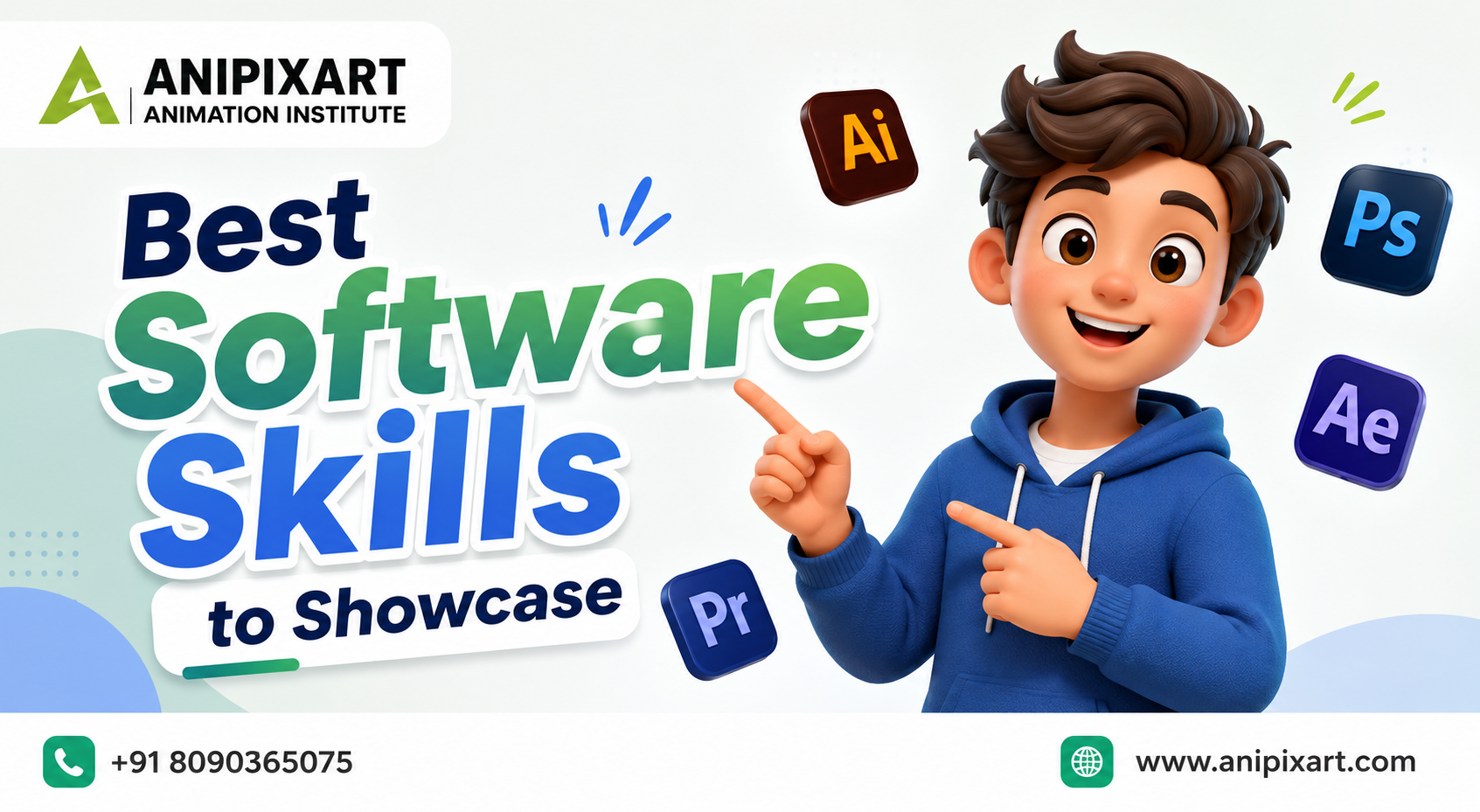
A strong animation portfolio should demonstrate proficiency in popular industry tools such as:
- Autodesk Maya
- Blender
- Adobe After Effects
- Adobe Photoshop
- Adobe Illustrator
- Adobe Premiere Pro
- Substance Painter
- ZBrush
- Unreal Engine
- Unity
- Toon Boom Harmony
- Cinema 4D
Recruiters also value problem-solving skills alongside software expertise.
How to Improve Your Animation Portfolio
Here are practical ways to strengthen your animation portfolio:
- Practice every day.
- Take feedback from professionals.
- Participate in animation challenges.
- Create original stories.
- Learn anatomy and acting.
- Improve lighting and rendering.
- Study animation principles.
- Update your demo reel regularly.
- Maintain consistent visual quality.
- Showcase versatility without losing specialization.
Course Duration
Animation portfolio development is generally included within professional animation programs.
Typical durations include:
- Certificate Course: 3–6 months
- Diploma Course: 6–12 months
- Advanced Diploma: 12–24 months
- Degree Program: 3–4 years
Students should ideally begin building their animation portfolio from the first month of training rather than waiting until the course ends. Regular project reviews and mentor feedback help produce a stronger final portfolio by graduation.
Course Fees
The fees for animation training vary depending on the institute, curriculum, infrastructure, software exposure, mentorship, and placement support.
Typical fee ranges are:
| Course | Approximate Fees |
|---|---|
| Certificate Course | ₹25,000–₹60,000 |
| Diploma Course | ₹60,000–₹1,20,000 |
| Advanced Diploma | ₹1,20,000–₹2,50,000 |
| Degree Program | ₹2,50,000–₹6,00,000+ |
When selecting a course, prioritize practical learning, portfolio development, live projects, and placement assistance over price alone.

Career Scope
A strong animation portfolio opens opportunities across multiple creative industries.
Popular career options include:
- 2D Animator
- 3D Animator
- Character Designer
- Concept Artist
- Storyboard Artist
- Modeling Artist
- Texturing Artist
- Lighting Artist
- Rigging Artist
- Motion Graphics Designer
- VFX Artist
- Game Artist
- Environment Artist
- UI Artist
- Digital Illustrator
- Product Visualizer
- Video Editor
- Freelance Animator
Industries hiring animation professionals include:
- Film production
- OTT platforms
- Television
- Gaming studios
- Advertising agencies
- EdTech companies
- Architecture firms
- Healthcare visualization
- Automotive companies
- E-commerce brands
- Digital marketing agencies
With AI improving production pipelines, skilled artists who combine creativity with technical expertise continue to enjoy strong demand.
Salary
Salary depends on skills, location, specialization, and the quality of your animation portfolio.
Typical salary ranges in India are:
| Experience | Average Annual Salary |
|---|---|
| Fresher | ₹2.5–5 LPA |
| 2–4 Years | ₹5–8 LPA |
| 5–8 Years | ₹8–15 LPA |
| Senior Professionals | ₹15–25+ LPA |
Freelancers with a high-quality portfolio can earn on a project basis, while experienced professionals working with international clients may earn significantly more.
Conclusion
Your animation portfolio is one of the most powerful tools for launching a successful creative career. It reflects your technical expertise, artistic vision, consistency, and passion for animation. Instead of waiting until the end of your course, start developing your portfolio from day one. Focus on original projects, maintain high presentation quality, and continuously improve your work through practice and professional feedback.
A polished portfolio, combined with industry-relevant software skills, live project experience, and strong communication, can significantly improve your chances of securing internships, placements, freelance opportunities, and long-term career growth in the animation industry.
Ready to build an industry-ready animation portfolio that grabs the attention of recruiters?
At Anipixart Animation Institute, we help students create a professional animation portfolio through live projects, expert mentorship, demo reel development, and hands-on training with industry-standard software. From character design and 3D animation to VFX and motion graphics, every project is designed to strengthen your skills and prepare you for real job opportunities. With portfolio reviews, placement support, and practical learning, you’ll gain the confidence to showcase your creativity and take the first step toward a successful career in the animation industry.
FAQs
1. What is an animation portfolio?
An animation portfolio is a professional collection of your best animation and creative projects that showcases your skills to recruiters and clients.
2. How many projects should an animation portfolio include?
Around 8–15 high-quality projects are usually sufficient, provided they demonstrate a range of relevant skills.
3. What should be included in an animation demo reel?
Include your strongest animation work, original scenes, acting shots, walk cycles, modeling, lighting, and other relevant projects in a concise 60–90 second reel.
4. Can beginners create an animation portfolio?
Yes. Students can start with practice exercises, personal projects, and classroom assignments, improving the portfolio as their skills grow.
5. Which software should I learn for animation portfolio development?
Popular tools include Autodesk Maya, Blender, Adobe After Effects, Photoshop, Illustrator, Premiere Pro, ZBrush, Substance Painter, Toon Boom Harmony, and Unreal Engine.
6. Does an animation portfolio matter more than a certificate?
In many hiring situations, recruiters place greater emphasis on the quality of your animation portfolio, as it demonstrates your practical abilities.
7. How often should I update my animation portfolio?
Review and update it every 2–3 months or whenever you complete a significantly better project.
8. Can I get freelance work through my animation portfolio?
Yes. A professional portfolio can help you attract freelance clients, remote projects, internships, and full-time job opportunities.
Anipixart Animation Institute
Address- Alkapuri Tiraha, C-28, Sector C, Ekta Vihar, Sector CS, Aliganj, Lucknow, Uttar Pradesh 226024 (location on google)
Phone number- +91 8090365075 or +91 9519910609
Website- www.anipixart.com
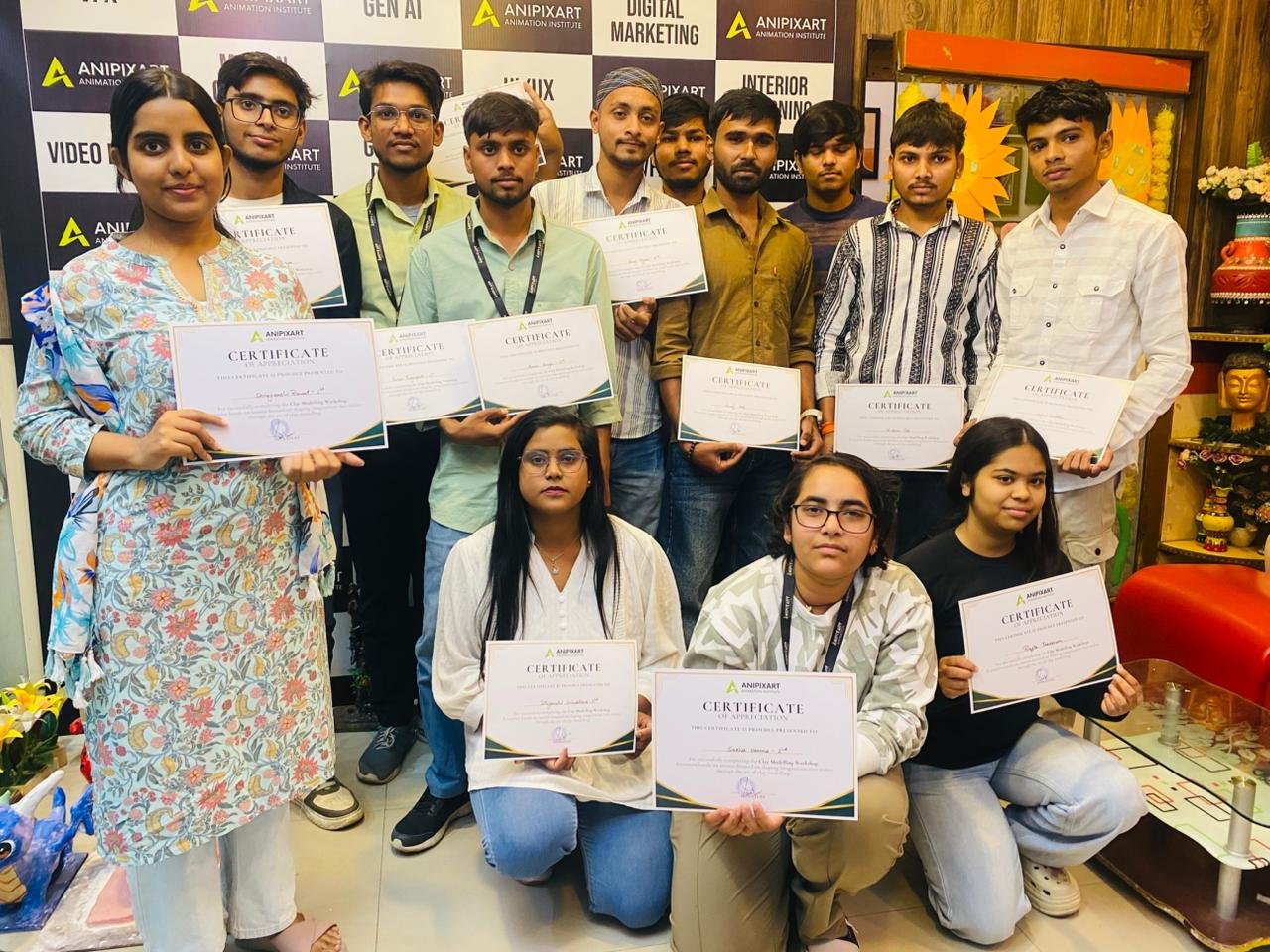
OUR GALLERY